
Potential Impact of Tariffs on Canadian Law Firms
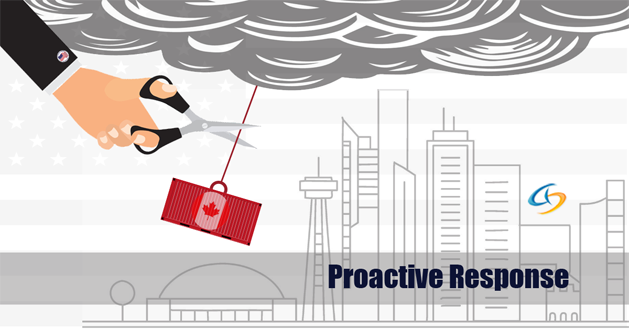
Before we can delve into the possible impact of a tariff war on small to mid-size law firms in Canada, we need to back up and agree on some simple facts about tariffs.
A tariff is a tax imposed by a government on imported or exported goods. The intent of tariffs is often not driven by the stated intention of the government and can include:
Making imported items less competitive with domestic goods and encouraging the purchase of domestic goods;
Generate revenue for a government looking to finance some unrelated activity;
Regulate trade imbalances between countries, including retaliation for perceived unfair trade practices;
Protection of struggling domestic industries; and
Retaliate for some perceived slight by another country.
Tariff Definitions
The three main types of tariffs executed by the government are:
Specific Tariffs: A fixed fee based on the physical units of an imported good (e.g., $100 per ton).
Ad Valorem Tariffs: A percentage of the value of the imported good (e.g., 10% of the total value).
Tariff Rate Quotas: A combination of both that allows a certain quantity of goods to be imported at a lower tariff rate, with higher rates applied to imports beyond that quantity.
A truism that has stood the test of time is that a tariff is a tax and frequently does not result in lower costs for the consumer, especially when the domestic product bears a higher price than the imported goods.
Impacts
Tariff wars do not necessarily result in an apparent “winner.”
One of the direct impacts of a tariff war is the re-awakening or renewal of nationalism at all levels, including government, corporations, and individuals. This nationalism can have both positive and negative consequences depending on its expression and context. Like any emotional outpouring, extreme nationalism can contribute to exclusionary practices, xenophobia, and conflict with other nations or groups.
There are likely to be a number of impacts on small to mid-size law firms in Canada as a result of any prolonged tariff war with the USA. In keeping with the motto, “never waste a good crisis,” firms need to brainstorm and explore potential opportunities.
Opportunities
The opportunities that may exist (and firms need to seek out proactively) could include:
Consult with local businesses to assess their exposure to tariffs and custom import/export regulations and develop strategies for mitigation.
Advise clients on possible business adjustments that could include corporate restructuring, mergers, windups, etc.
Renegotiating contractual obligations, including supply chains, sales contracts, credit agreements, etc.
Guiding clients on employment law and labor relations as a result of business adjustments.
Collaborating with other professional services firms (accountants, lobbyists, larger law firms, etc.) to be able to offer a complete package of services.
Developing top-of-mind / expertise in specific industry sectors (e.g., farming, transportation, energy, etc.).
Protecting clients’ intellectual property in light of the possible shifts in trade dynamics.
Mediating marital arrangements as consumers who will face increased costs may be unable to make support payments or stretch out support payments.
A note of caution overall: while some law firms may benefit from increased work related to trade issues and compliance that can arise from a tariff war, the potential for economic strain on your client base could also pose significant challenges for small to mid-sized law firms in Canada.
The key is to pursue a strategy proactively that emphasizes your firm’s strengths.